
 Language


More Languages
Language
Vacuum packing removes the air; the film keeps it out. We supply aluminum foil vacuum bags and the forming and non-forming film used in thermoforming lines — specified against your product, your machine and your storage conditions.
Two jobs at once: hold a vacuum, and keep it held
A vacuum bag is doing two separate jobs. First, it has to be evacuated and sealed without the seal failing or the film drawing into a wrinkle that leaks. Second, it has to keep air out afterwards for as long as the product is stored. Those two requirements pull in different directions — a structure that seals easily is not automatically the structure with the best barrier — which is why the film stack, the sealant layer and your machine's sealing parameters are normally specified together.
Removing air slows oxidation and rancidity in meat, fish, nuts and dried goods — the reason the format exists.
A sealed, evacuated pack limits moisture loss, which is what causes freezer burn and dry texture in frozen storage.
Aluminum foil layers block light and add a strong oxygen and moisture barrier, at higher cost than transparent or metallised alternatives.
For thermoforming lines we supply the base web and the lidding web as a matched pair, since they are sealed to each other.
Bones, shells and frozen edges test the film. Structures can be specified for abrasion and puncture where the product demands it.
Food-contact materials with the declarations and test documentation your market requires — ask for the documents that apply to you.
Categories where removing the air is the point
The classic application — vacuum packing for case-ready meat, cured products and portioned cuts.
Fillets, portions and shellfish, where leakage prevention matters as much as barrier performance.
Blocks, wedges and slices, frequently sold as a vacuum pack with a printed lidding film.
Frozen portions and meal-prep formats where vacuum packing limits freezer burn and keeps portions compact.
Pouches intended to be cooked in the pack, which adds a temperature requirement to the film specification.
Dry products where oxygen and moisture control extends keeping quality — note that roasted coffee usually needs a one-way valve instead of a hard vacuum.
Aluminum foil vacuum pouches and related high-barrier formats

Aluminum foil laminate vacuum bag with vacuum-grade sealing for meat and seafood. MOQ 5,000 pcs, free samples, BRC & FDA...
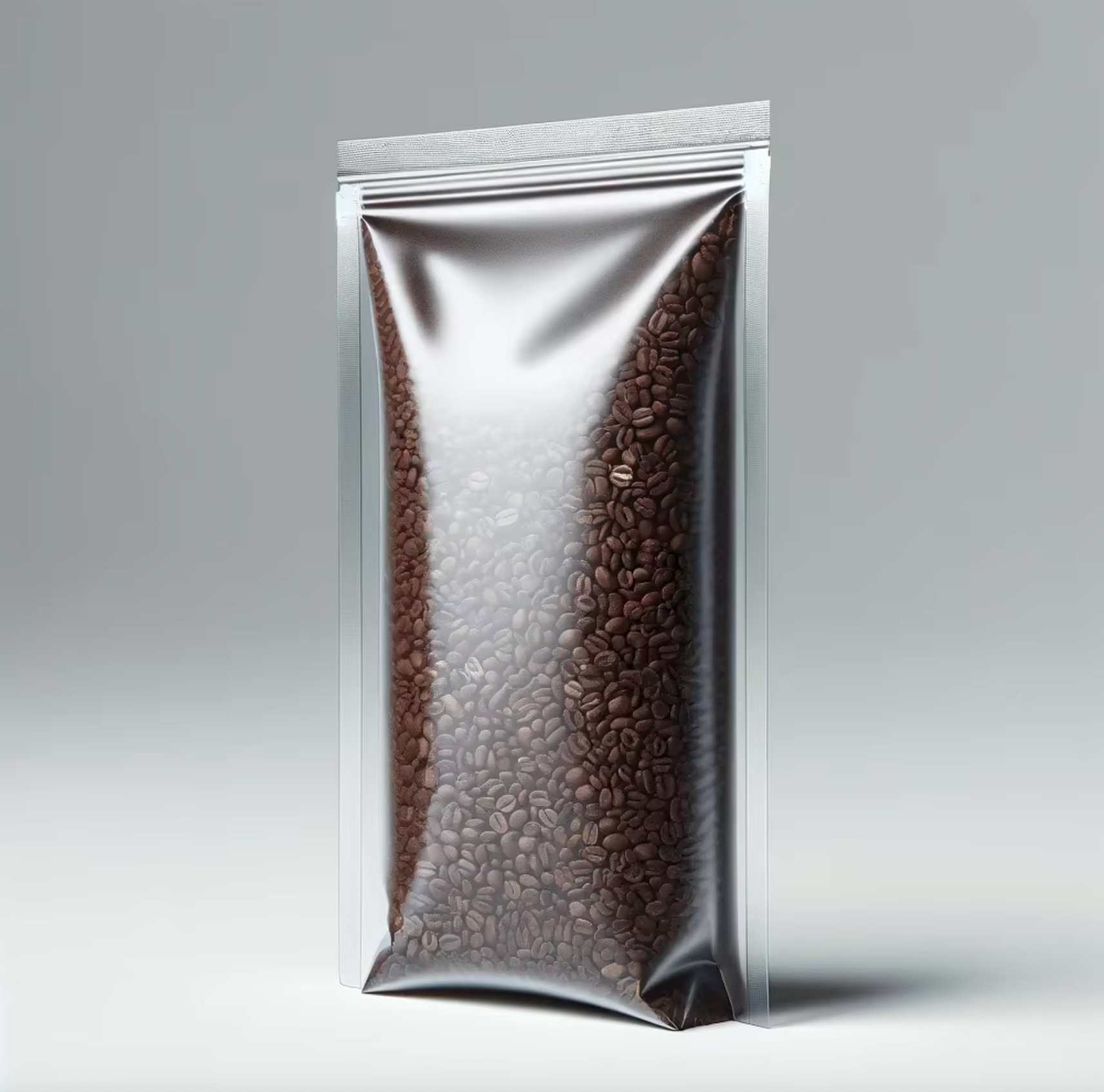
Aluminum foil laminate pouch for coffee and roasted beans. MOQ 5,000 pcs, free samples, BRC & FDA certified OEM.

Aluminum foil laminate pouch with single-serve sachet formats for cosmetics and personal care. MOQ 5,000 pcs, free sampl...
Often specified alongside vacuum packaging
Forming and non-forming webs, plus printed roll stock for automatic packing lines.
Freezer-grade structures and formats for products going into the cold chain.
Where the pack needs to stand on shelf after filling rather than lie flat.
A note on the two directions this category splits into. If you are buying pre-made pouches, the conversation is about pouch size, seal width and print. If you are running a thermoforming line, the conversation shifts to forming depth, web width and the matching non-forming film — and the two are quoted differently. Telling us which machine you are on shortens the quotation considerably.
Common questions from buyers sourcing vacuum bags and film
Send your product, pack format and machine details — we will propose a structure and supply a sample